To remain competitive in the fast-paced production environment of today, accuracy, effectiveness, and flexibility are essential. This is where computer numerical control, or CNC machines come into play, revolutionizing the design, prototyping, and manufacturing of goods. CNC machines provide unmatched control over the manufacturing process by combining advanced programming with the knowledge of trained operators, greatly increasing output and quality. Let’s discuss how CNC machines have reshaped the manufacturing sector and the roles that operators and programming play in this transition.
- WHAT IS A CNC MACHINE?
- RISE OF CNC MACHINES
- ALL ABOUT CNC MACHINE PROGRAMMING
- HUMAN KNOWLEDGE IN THE CNC ENVIRONMENT: OPERATORS’ ROLE
- FUTURE OF CNC MACHINES
- CONCLUSION
WHAT IS A CNC MACHINE?
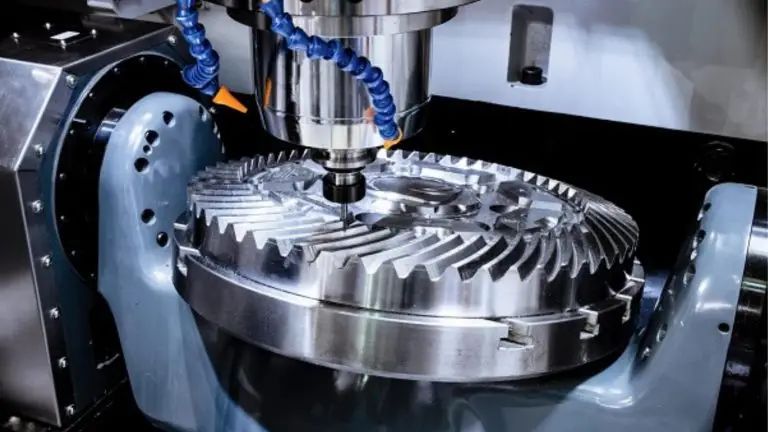
A CNC machine, or computer numerical control machine, is a kind of automated manufacturing equipment that is controlled by computer programming. CNC machines follow exact instructions given by a computer program (G-code) to do activities like cutting, drilling, milling, or shaping materials, in contrast to traditional machines that need manual control. Because of the precision of these machines, producers are able to make parts with high accuracy and reproducibility. They are frequently used to efficiently build complicated parts in industries like electronics, automotive, and aerospace. There are several varieties of CNC machines, such as routers, lathes, and milling machines, each intended for a particular purpose.
RISE OF CNC MACHINES
Manufacturing has traditionally relied mostly on manual labour, which frequently results in variable quality, slower production times, and human error. These difficulties started to lessen with the introduction of CNC machines. Because CNC machines are operated by software that has been written, they can carry out intricate operations with a high level of precision and consistency. A significant turning point in the business was reached with the transition from manual to computer-controlled operations, opening the door for more automation, accuracy, and creativity.
ALL ABOUT CNC MACHINE PROGRAMMING
With CNC programming, manufacturers may produce parts automatically while maintaining manual control over the process. CNC machines allow manufacturers to precisely and efficiently turn raw materials into completed goods in big quantities. Compared to creating things by hand, mass production using repeated machine movements can be faster, more reliable, and less expensive. Products may potentially become safer and stronger as a result. Because computers can do the necessary mathematical computations and measurements, CNC machines simplify the process of manufacturing objects with intricate, three-dimensional geometries.
CNC programming functions as a kind of human-computer translation. This process involves taking a computer-aided design (CAD) model, which is often created by a person, and converting it into a set of machine-readable instructions before turning it into a reality. A company or employee may be interested in CNC programming for a variety of reasons, particularly if CNC machining and its numerous procedures are a regular part of your operations.
IMPORTANT CODES RELATED TO CNC PROGRAMMING
The most widely used term for the language used in CNC programming is “G-code,” but there are a number of different varieties. While G-code may apply to all programming, it also only relates to the geometry portion of the code. Because of this, it will also be helpful to understand the following terms:
- N-codes: These monitor machine code for conversions that are made by hand. If you are writing and converting instructions with CAM software, they are not required.
- S-codes: These represent the various spindle speeds that the CNC machine must achieve, sustain, and alternate between. (Remembering this is also simple: S = spindle speed.)
- T-codes: These codes assist machines in determining the kind of tool required for particular parts.
- D-codes: This kind of code can indicate two distinct distances: the amount that the machine’s tool protrudes from the tool holder or the offset from the center line.
- F-codes: The letter “F” makes it simple to recall that this kind of code denotes the feed rate and the various speeds at which the tool must operate during machining.
- G-codes: These allow the machine to know precisely where and when to start, halt, and move between locations by sharing the model’s geometry.
- M-Code: Code that doesn’t fall under any of the other code types is referred to as an M-code. M stands for “miscellaneous,” which includes things like spindle control and coolant.
TYPES OF CNC PROGRAMMING
Manufacturers utilize a variety of CNC programming techniques for creating parts. These are:
- Manual CNC Programming – The manual approach is the most basic type of CNC machine programming. It involves manually inputting commands into a CNC machine control console. Simple parts are best suited for manual programming. It’s crucial to remember that the procedure can be time-consuming.
- Conversational Programming – Conversational programming is the process of using a CNC machine that has an integrated conversational programming interface. This interface allows users to enter commands in plain English rather than G-code. Some systems will ask the operator a series of guided questions to fully define the job. Conversational programming works well with simple designs, just like manual programming. Additionally, compared to manual CNC programming, this CNC programming is quicker and easier.
- CAM Programming – One of the most popular forms of CNC programming, particularly for CNC machining prototypes, is computer-aided manufacturing software. This is because it may be used to create parts of any complexity. When compared to manual CNC programming, CAM software offers unparalleled speed and accuracy. A programmer can see the tool path with the CAM software, which helps them identify possible problems during machining. Additionally, CAM software gives programmers greater flexibility because it allows them to move code across machines without having to redo the entire program.
HUMAN KNOWLEDGE IN THE CNC ENVIRONMENT: OPERATORS’ ROLE
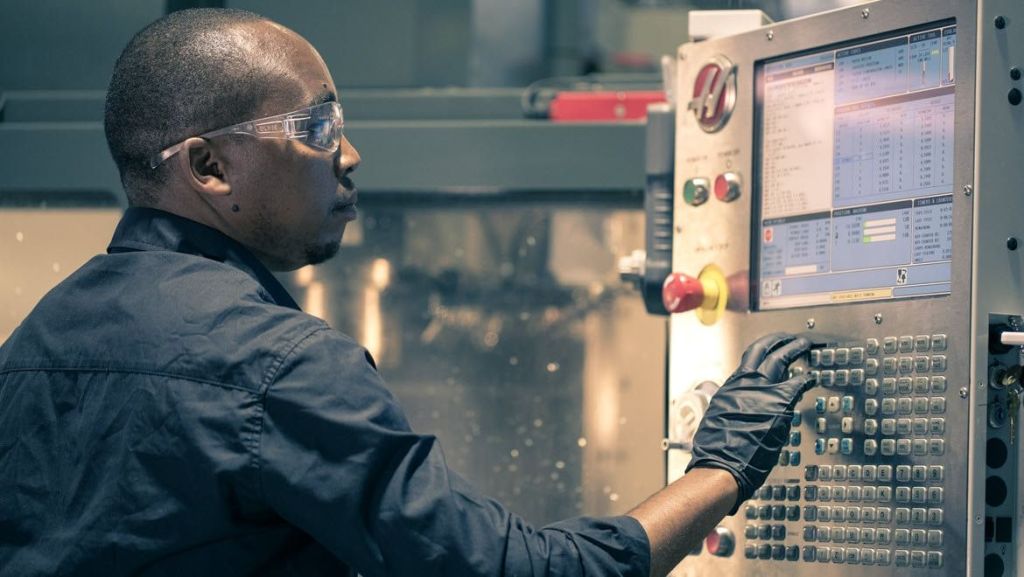
Programming, configuring, and running a CNC machine allows a CNC operator to create machine parts. Among a CNC operator’s primary duties are equipment maintenance, adherence to safety and quality regulations, and meticulous part documentation. The following are a few additional typical responsibilities:
- Machine Setup: Making sure the CNC/VMC machine is properly configured for the given operation or job, including loading the required equipment and supplies.
- Programming: Programming is the process of loading and executing pre-written programs or creating original programs to enable the CNC/VMC machine to carry out a variety of machining tasks, including shaping, drilling, milling, and cutting.
- Machine Operation: Machine operation involves running the CNC/VMC machine throughout the manufacturing process, keeping an eye on the machining activities, and adjusting as necessary to guarantee the precision and quality of the final products.
- Quality Control: Quality control involves checking completed items to make sure they adhere to the essential requirements and standards for quality and adjusting machine settings as needed to address any variations.
- Maintenance: To guarantee optimum performance and avoid malfunctions, the CNC/VMC machine should undergo routine maintenance procedures like cleaning, lubricating, and replacing worn-out or damaged parts.
- Troubleshooting: Finding and resolving any faults or problems with the CNC/VMC machine, such as mechanical failures, programming errors, or tool wear, and then taking appropriate action.
- Safety: Wearing the proper personal protective equipment (PPE) and following safety procedures when operating the machine are just two examples of how one can ensure a safe working environment for oneself and others by adhering to safety rules and recommendations.
FUTURE OF CNC MACHINES
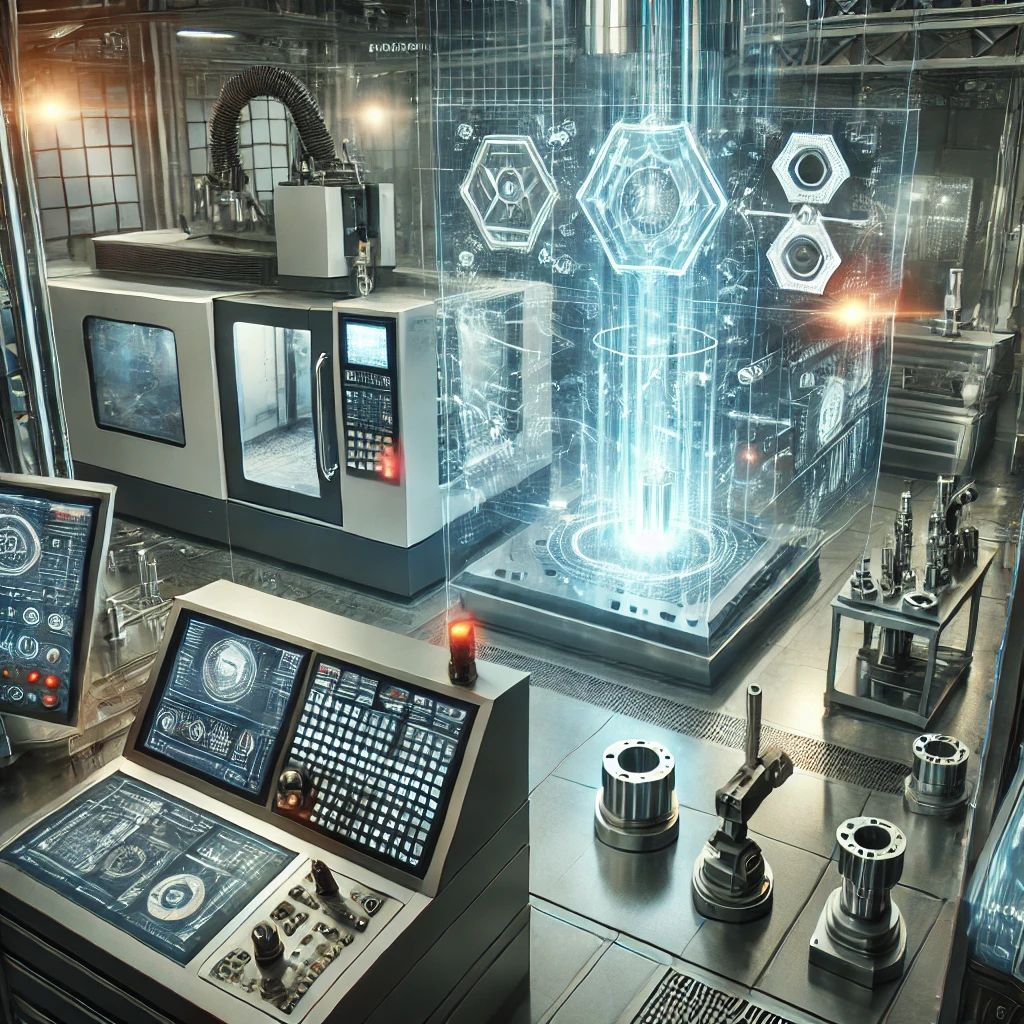
CNC machines are constantly changing as technology progresses. Even more optimization and flexibility will be possible with the further integration of machine learning and artificial intelligence into CNC operations. More automation, better predictive maintenance, and simplified programming will probably be the key goals of future advancements in order to guarantee even quicker turnaround times and less downtime. CNC machines will become more interconnected via the Internet of Things (IoT) as enterprises continue to adopt Industry 4.0, allowing for real-time data collecting and analysis. Machines can now autonomously optimize production schedules, anticipate maintenance requirements, and monitor their own performance thanks to this connection. CNC operations will be further improved by artificial intelligence (AI) and machine learning, which will allow machines to optimize tool paths, adjust to changing circumstances, and even increase component quality without the need for human interaction.
Moreover, CNC machines are becoming increasingly integrated with other components of the manufacturing system as Industry 4.0 takes pace. This implies that real-time data from CNC machines may be studied to improve production processes, predictive analytics, and decision-making.
CONCLUSION
Future developments in CNC machines are anticipated to be even more significant as technology develops further, enabling more intelligent, effective, and environmentally friendly production methods that will further influence the sectors they service.

